
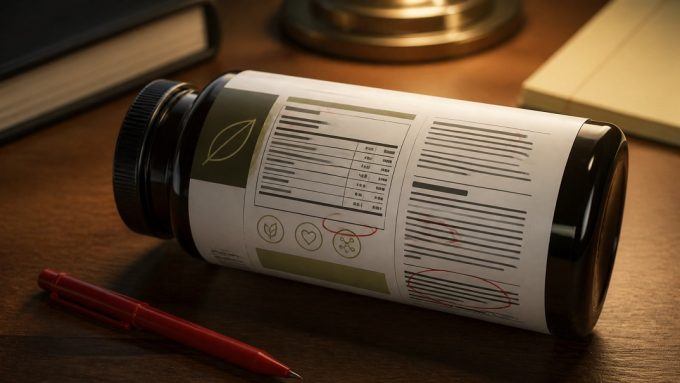
HGH Supplement Marketing Claims: What the FDA and FTC Actually Allow

Almost every HGH releaser product page includes some version of the same fine print – “this statement has not been evaluated by the FDA” – and almost none of them explain what that actually means, who enforces it, or what has happened historically when marketers in this exact category crossed the line. Here’s the regulatory backdrop that governs everything you read on a supplement label or in a supplement ad, explained plainly.
Two Different Agencies, Two Different Jobs
The FDA and FTC share jurisdiction over supplement marketing, but they oversee different parts of it: the FDA has primary responsibility for claims made in labeling, packaging, and other point-of-sale materials, while the FTC has primary responsibility for claims made in advertising generally. The two agencies coordinate under a formal liaison agreement, and since 1998 the FTC alone has settled or adjudicated more than 200 cases involving false or misleading health-product advertising claims [1].
The DSHEA Framework: What Supplements Are Legally Allowed to Say
The Dietary Supplement Health and Education Act of 1994 (DSHEA) created the legal category that allows a product like an HGH releaser to make a “structure/function claim” – a statement about how an ingredient may affect the normal structure or function of the body, such as “supports energy levels” – without going through drug approval [2]. What it cannot do, without becoming a regulated drug, is claim to diagnose, treat, cure, mitigate, or prevent a specific disease.
Three conditions have to be met for a structure/function claim to be lawful: the manufacturer must have substantiation that the claim is truthful and not misleading before making it, the manufacturer must notify the FDA of the claim within 30 days of first using it, and the claim must be accompanied by a specific, legally defined disclaimer [3]. That disclaimer, verbatim, is: “This statement has not been evaluated by the Food and Drug Administration. This product is not intended to diagnose, treat, cure, or prevent any disease.” [3] That’s the exact sentence you see on nearly every supplement label and website in this category – now you know precisely why it’s there and what it legally signifies.
A current regulatory note: as of a December 2025 FDA letter to the supplement industry, the agency is reviewing whether this disclaimer needs to appear on every single label panel where a claim is made, or just once per label, and announced it will exercise enforcement discretion on the “every panel” requirement while a formal rule change is considered [4]. This doesn’t remove the disclaimer requirement itself – the FDA was explicit that it still expects the disclaimer on the label and linked to each claim – but it’s a good example of how this area of regulation continues to evolve.
The FTC’s Substantiation Standard
Separately from the FDA’s labeling rules, the FTC requires that any advertising claim about a health product’s benefits or safety be supported by “competent and reliable scientific evidence” before it’s made – not after the fact, and not based on anecdotal testimonials alone. This standard applies to structure/function claims just as much as disease claims; the legal category of the claim doesn’t exempt it from needing real evidentiary support.
The Enforcement History in This Exact Category
HGH supplements specifically have a documented history of FTC enforcement action, which is worth knowing regardless of which product you’re considering:
- In a 2005 case, the FTC reached a settlement requiring the defendants – marketers of HGH pills and sublingual sprays – to pay up to $20 million in consumer redress over deceptive advertising that claimed their products would raise blood HGH levels and deliver a wide range of anti-aging benefits [5]. Alongside that settlement, the FTC sent warning letters to more than 90 internet sellers of HGH enhancers, stating plainly that it was “not aware of any competent and reliable scientific evidence” supporting claims that oral pills and sprays could increase the body’s HGH levels and produce anti-aging effects, and published a consumer education brochure titled “‘HGH’ Pills and Sprays: Human Growth Hype?” [5].
- That same year, a separate FTC action resulted in a $485,000 settlement against a Florida-based marketer who used mass spam email to promote false anti-aging claims for HGH herbal supplements [6].
This isn’t purely historical, either. The FTC has continued active enforcement in closely adjacent “growth” supplement categories more recently – in 2026, it finalized a $750,000 order against a company marketing height-growth supplements to children and teenagers, over both unsubstantiated health claims and the use of fake or incentivized consumer reviews [7]. The consistent pattern across two decades of cases: claims about hormone levels and dramatic body-changing effects draw regulatory attention, and the bar for “competent and reliable scientific evidence” is a real one that many marketers in this space have failed to clear.
What This Means When You’re Reading a Product Label or Ad
A few practical takeaways from all of this:
- The FDA disclaimer isn’t a red flag specific to one product – it’s a required legal statement across virtually the entire supplement category, and its presence alone says nothing about whether a specific ingredient or product actually works.
- What’s worth watching for is language that crosses from a structure/function claim into a disease claim, or into the kind of dramatic, unsubstantiated territory the FTC has specifically taken enforcement action against in this category before – phrases implying a product will definitively “reverse aging,” “restore youth,” or produce outcomes equivalent to a prescription drug.
- A claim being legally permitted (a structure/function claim with the right disclaimer) is a different question from whether that specific claim has strong evidence behind it. That’s exactly the gap our ingredient dose comparison is meant to help with for one specific product.
Frequently Asked Questions
Why does every supplement label say “this statement has not been evaluated by the FDA”?
It’s legally required whenever a label makes a structure/function claim. It signals the FDA hasn’t reviewed that specific claim and that the product isn’t marketed as a disease-treating drug.
Has the FTC taken action against HGH supplement marketers before?
Yes. A well-documented 2005 case resulted in up to $20 million in consumer redress over unsubstantiated anti-aging claims, plus warning letters to more than 90 online HGH enhancer sellers.
What’s the difference between a structure/function claim and a disease claim?
A structure/function claim describes an effect on the body’s normal structure or function (e.g., “supports energy levels”). A disease claim states or implies treatment, cure, or prevention of a specific disease – legally reserved for approved drugs.
Does an FDA disclaimer mean a supplement doesn’t work?
Not necessarily. It’s a required statement for an entire category of claims, not a verdict on any specific ingredient’s effectiveness.
Sources
- “Health Products Compliance Guidance.” Federal Trade Commission
- “Food and Dietary Supplement Labeling Claims: FDA Regulation and Select Legal Issues.” Congressional Research Service, via Congress.gov
- “Notifications for Structure/Function and Related Claims in Dietary Supplement Labeling.” U.S. Food and Drug Administration
- “Letter to Dietary Supplement Industry: DSHEA Disclaimer” (Dec. 11, 2025). U.S. Food and Drug Administration
- “FTC Targets Bogus Anti-Aging Claims for Pills and Sprays Promising Human Growth Hormone Benefits” (2005). Federal Trade Commission
- “Florida Man Settles FTC Charges of Sending Illegal Spam and Making False ‘Human Growth Hormone’ Product Claims” (2005). Federal Trade Commission
- “FTC Approves Final Order Against TruHeight for Deceptive and Unsubstantiated Advertising of Supplements for Kids and Teens” (2026). Federal Trade Commission
This article is for general informational purposes only and is not legal advice. Regulations governing dietary supplement labeling and advertising can change; consult the FDA’s and FTC’s official guidance, or a qualified attorney, for current compliance questions.


Comments are closed.